Why Vehicle Registration Protection Matters More Than Ever for UK Drivers
If you own a car in the UK, you probably think about your number plates only when they get dirty or when the DVLA renewal arrives. But the reality is that your registration mark is a piece of identity that can be stolen, copied, and used against you without your knowledge. This is where vehicle registration protection steps in - not as a luxury add-on, but as a practical safeguard against a growing problem that affects thousands of drivers every year.
What Exactly Is Vehicle Registration Protection?
Vehicle registration protection, in the context of the UK driving landscape, refers to the systems and services designed to monitor how your registration mark is used across official and unofficial channels. It is a way to spot when someone else is using your number plate on a different vehicle - a practice known as cloning. The concept is straightforward: your registration belongs to you, and you should be the only person using it on the road. When that is not the case, the consequences can range from penalty charge notices landing on your doormat to more serious legal trouble involving traffic offences you never committed.
For the average motorist, the idea of someone cloning their plate seems remote. But cloned plates are often used for fuel drive-offs, speeding, running red lights, and even criminal activity. The registered keeper gets the fines, the court summons, and the stress of proving they were not at the scene. That is where a service like protect-a-plate vehicle registration protection becomes relevant - it acts as a watchdog that alerts you when your mark appears somewhere it should not.
How Number Plate Cloning Works in Practice
Cloning is not complicated. A person with a similar vehicle to yours - same make, model, colour - simply buys a set of replica plates with your registration number. They attach them to their car and drive. To a camera, the plate looks legitimate because the number is real and the vehicle matches the description on the DVLA database. The only way to catch it is for the real owner to notice something off, or for a verification check to happen at the point of offence.
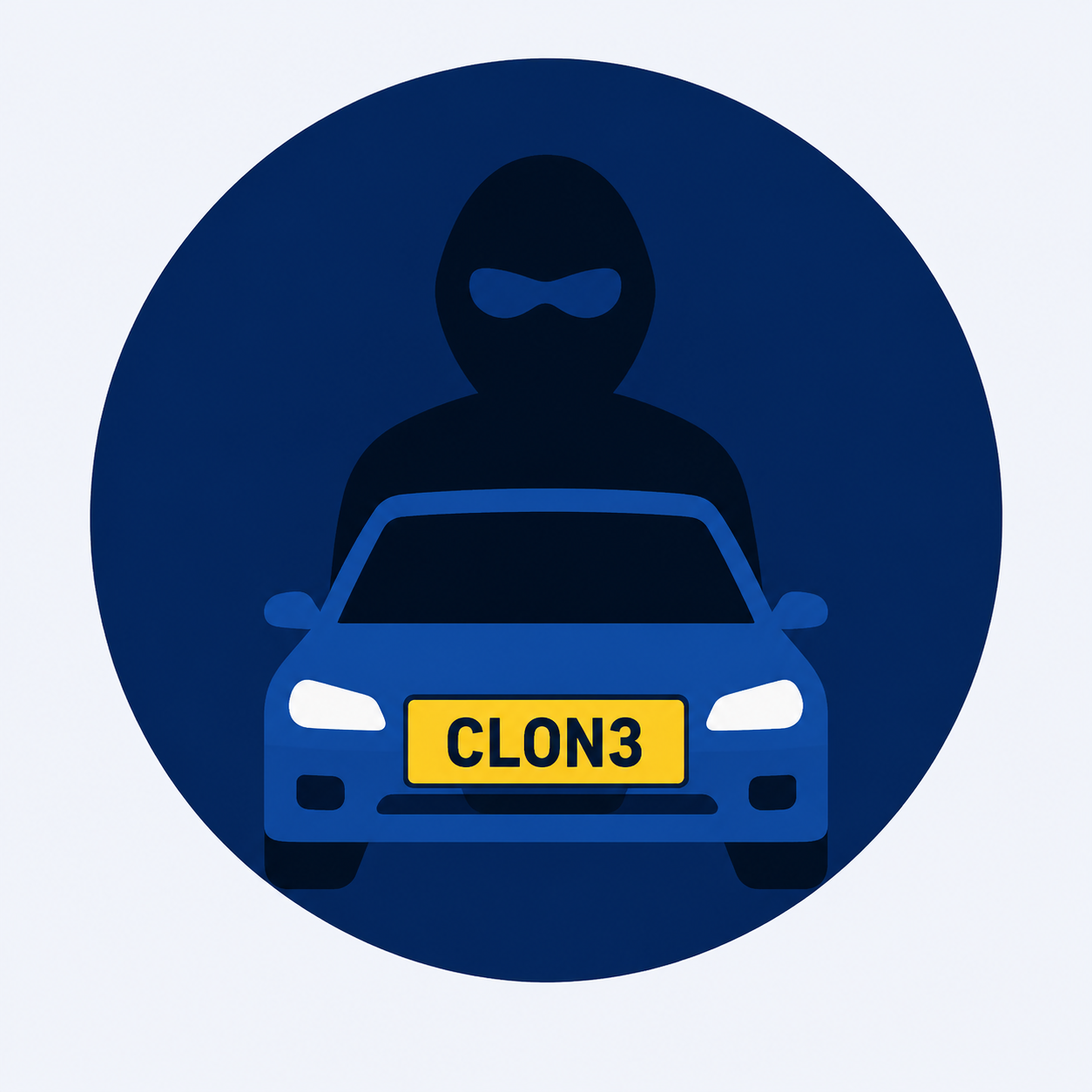
This is why passive protection is not enough. Relying on the police to spot a cloned plate during a traffic stop is optimistic at best. Most cloned vehicles are driven carefully to avoid attention, and the offences that pile up are attributed to the innocent owner. Without some form of active monitoring, you might not realise your plate has been cloned until the penalty notices become hard to ignore.
What Gets Affected When Your Plate Is Cloned
- Penalty charge notices for congestion charges, tolls, or bus lanes
- Fixed penalty notices for speeding or red light offences
- Fuel theft reports that link back to your registration
- Congestion charge and low emission zone fines, especially in London and other major cities
- Potential involvement in crime investigations, which can be time-consuming and stressful to resolve
Each of these carries its own administrative headache. Proving you were not driving at the time often requires evidence like dashcam footage, receipts, or witness statements. The burden falls on you, not the authorities, to clear your name.
The Role of Real-Time Alerts in Registration Security
Traditional advice for protecting your plate has been to keep your registration certificate safe, report lost plates quickly, and check your vehicle history. That is still good practice, but it does not detect cloning as it happens. Real-time alerts change the equation. When your registration is checked against a database - for example, at a toll plaza, a car park, or during a traffic stop - a notification can be sent to you if the check triggers a match against your registered details. This gives you a window to act before the fines escalate.
Services like those offered by Protect-A-Plate build on this principle. They create a layer of verification that sits between your plate and how it is used in the world. The idea is not to replace official DVLA records but to add a second check that can alert you to anomalies. If someone tries to use your registration in a context that does not match your vehicle, you get a heads-up. That early warning is often the difference between a quick resolution and months of correspondence with enforcement agencies.
How to Think About Vehicle Registration Protection
It helps to think of this as similar to credit monitoring. You do not check your credit report every day, but you want to know if someone applies for a loan in your name. The same logic applies to your number plate. The risk is not that someone will steal the physical plate from your car - though that does happen - but that they will use your identity to commit offences elsewhere. Vehicle registration protection is the mechanism that flags that misuse.
One practical angle is that the protection is most valuable if you drive a common car. The more popular your make and model, the easier it is for a cloner to find a matching vehicle. A silver Ford Focus or a white Volkswagen van is a much easier target than a rare classic car. If your car is one of thousands on the road, the clone blends in. That is not a reason to panic, but it is a reason to consider active monitoring.

What to Look For in a Registration Protection Service
- Alerts that reach you quickly, ideally by email or app notification
- A process for reporting misuse that does not leave you dealing with it alone
- Coverage that includes the major enforcement databases used in the UK
- Simple setup that does not require you to change your registration or your insurance
- Transparent terms about what is monitored and what is not
Not every service is the same. Some focus purely on alerts, while others offer a more comprehensive package that includes identity verification support. The key is to choose something that fits your driving habits and your tolerance for administrative risk.
When Does Protection Make the Most Difference?
The value of protect-a-plate vehicle registration protection becomes clear in specific situations. If you live near a major city with congestion charging, you are at higher risk of cloned plates being used to avoid fees. If you park on the street regularly, your plates are visible and accessible. And if you travel through areas with average speed cameras, a single cloned vehicle can generate dozens of notices in a week.
Another scenario is selling your car. When you sell, your registration is eventually transferred or cancelled, but there is a period where the new owner has not yet updated the records. During that window, the plate can be used on a different vehicle if the buyer is not careful. Having protection in place during and after a sale gives you peace of mind that you will not be held liable for offences committed by the new owner.
For businesses with fleets, the stakes are higher. A cloned plate on a company vehicle can lead to fines, legal fees, and operational disruption. Fleet managers often use registration protection as part of a broader compliance strategy, because one cloned plate can tie up a vehicle in bureaucracy for weeks.
The Practical Side of Keeping Your Registration Safe
Beyond subscribing to a service, there are basic habits that help. Check your number plates regularly for signs of tampering. If your plates are held on by screws, make sure they are secure. Some drivers use anti-theft screws that require a special tool to remove. It is also worth keeping a note of your vehicle's unique features - a dent, a sticker, a specific accessory - so you can describe it if you need to prove a plate is not yours on a camera image.
If you receive a penalty notice for an offence you did not commit, act quickly. The earlier you report it, the easier it is to resolve. Most enforcement agencies have a process for victims of cloning, but they usually expect you to provide evidence. That is where an alert from a protection service gives you an advantage - you know about the offence before the formal notice arrives, so you can start gathering evidence immediately.

Why This Matters for the Average Driver
The UK has a dense network of cameras, tolls, and automated enforcement systems. Your number plate is the key that unlocks all of them. Keeping that key secure is not about being paranoid; it is about being practical. The cost of dealing with a cloned plate - in time, stress, and potential legal fees - far outweighs the effort of putting protection in place. For most drivers, the question is not whether cloning can happen, but whether they will know about it before it becomes a problem.
Services that offer protect-a-plate vehicle registration protection fill that gap. They turn a passive registration into something that reports back to you. It is a small step that can save you from a much bigger headache down the road.
 Twitter
 Facebook
 Instagram
Corrections
Spot something wrong? Send it to the desk and it gets fixed in the open.